Build a Homeowner Maintenance Map Before AI Sends Check-Ins
Build a Homeowner Maintenance Map Before AI Sends Check-Ins
Most real estate CRMs treat the closing date as the start of a birthday-card sequence. That was never enough, and it becomes actively weak once AI starts writing past-client emails, review requests, and referral prompts at scale.
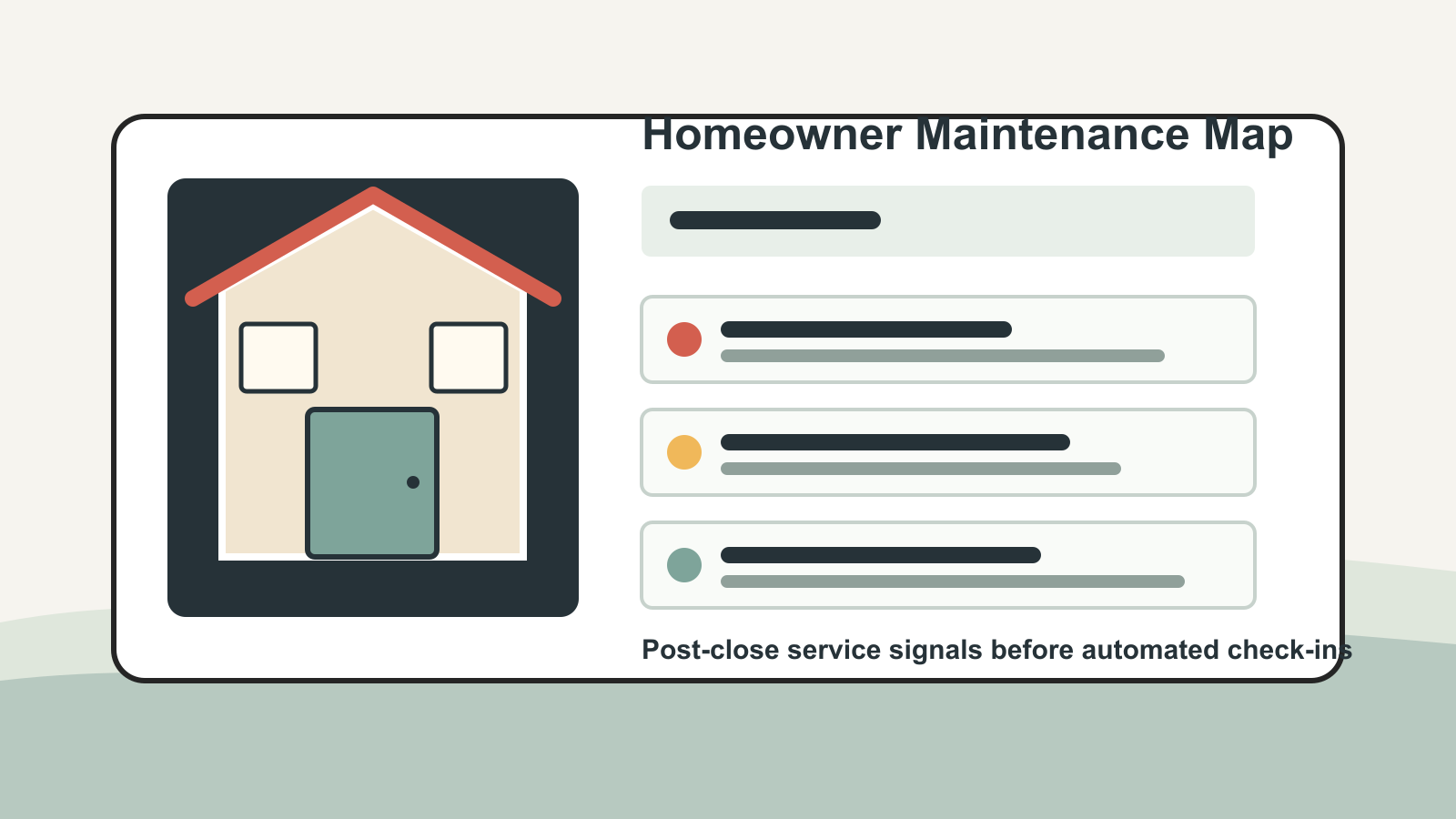
The better primitive is a homeowner maintenance map: a living post-close record of the property, the owner, likely service moments, and the next useful reason to reach out. It gives automation something real to respond to instead of asking an AI model to invent relevance from a name, a closing date, and a generic neighborhood update.
The timing matters because homeowners are staying put longer. NAR's 2025 Profile of Home Buyers and Sellers reported that buyers now expect a median tenure of 15 years in the homes they purchase, and sellers had owned their homes for a median 11 years before selling. That means a real estate relationship is no longer a light annual touch. It is a decade-plus operating surface.
Maintenance pressure is also rising. Angi's 2025 homeowner spending pulse found that 71% of surveyed homeowners had postponed a planned project, 62% were more concerned about affording maintenance than they were at the end of 2024, and 71% were prioritizing preventive maintenance to avoid larger bills later. Harvard's Joint Center for Housing Studies revised its 2026 remodeling outlook in April and projected owner-occupied improvement and repair spending would reach $518 billion by the end of 2026. The signal is direct: past clients are not only potential referrers. They are active homeowners managing costs, deferred work, risk, and timing.
That is where most AI follow-up systems miss. They optimize the message before they have the reason. They generate friendly copy, but they do not know that the client bought a 1998 roof, skipped the post-closing HVAC service, refinanced into a payment they love, delayed a bathroom update, or mentioned aging parents moving nearby. Without that operational memory, AI outreach becomes polished noise.
What belongs in the map
A homeowner maintenance map does not need to be complex. Start with five fields that make the next contact useful.
First, keep the property profile: age band, known major systems, roof age if available, HVAC age if available, pool, septic, solar, flood zone, HOA, and any inspection items the client accepted rather than repaired. Do not bury this inside transaction PDFs. Pull the operational facts into structured CRM fields or a linked home record.
Second, record the owner's intent horizon. Some homeowners are true long-hold clients. Some are likely move-up buyers. Some are aging in place. Some bought an investment property. Some may need a vendor bench more than a market report. Tag the relationship by expected homeowner journey, not only by lead source.
Third, create service moments. These are not marketing campaigns. They are reminders tied to real homeowner risk: insurance review, homestead exemption, property tax assessment window, hurricane preparation, HVAC service season, annual equity review, warranty expiration, permit closeout, and local vendor checkups. The map should answer one question: what would a competent human remember to ask about if they were managing the relationship carefully?
Fourth, track vendor and outcome history. If the client asked for a roofer, record who was referred, when, whether the client used them, and whether the experience was good. That gives future automation context. It also prevents the embarrassing cycle where every check-in sounds like the first interaction.
Fifth, store consent and channel preference. A useful map respects whether the client wants email, SMS, phone, or no automated outreach. This matters even when the content is helpful. Salesforce's State of the Connected Customer research says customers expect personalization and consistent interactions, but that expectation does not erase the need for permission and restraint.
The automation should read signals, not dates
The mistake is building a 12-month drip and calling it a past-client system. A date-based drip is easy to schedule, but it ignores what changed.
A maintenance map lets the CRM trigger from signals. A roof-age field can prompt an annual insurance and storm-prep note. A tax-assessment window can trigger a valuation review. A postponed-project tag can trigger a spring vendor check, not a generic "hope you are doing well" message. A long-hold tag can produce an equity-and-maintenance review, while a likely move-up tag can produce a readiness conversation.
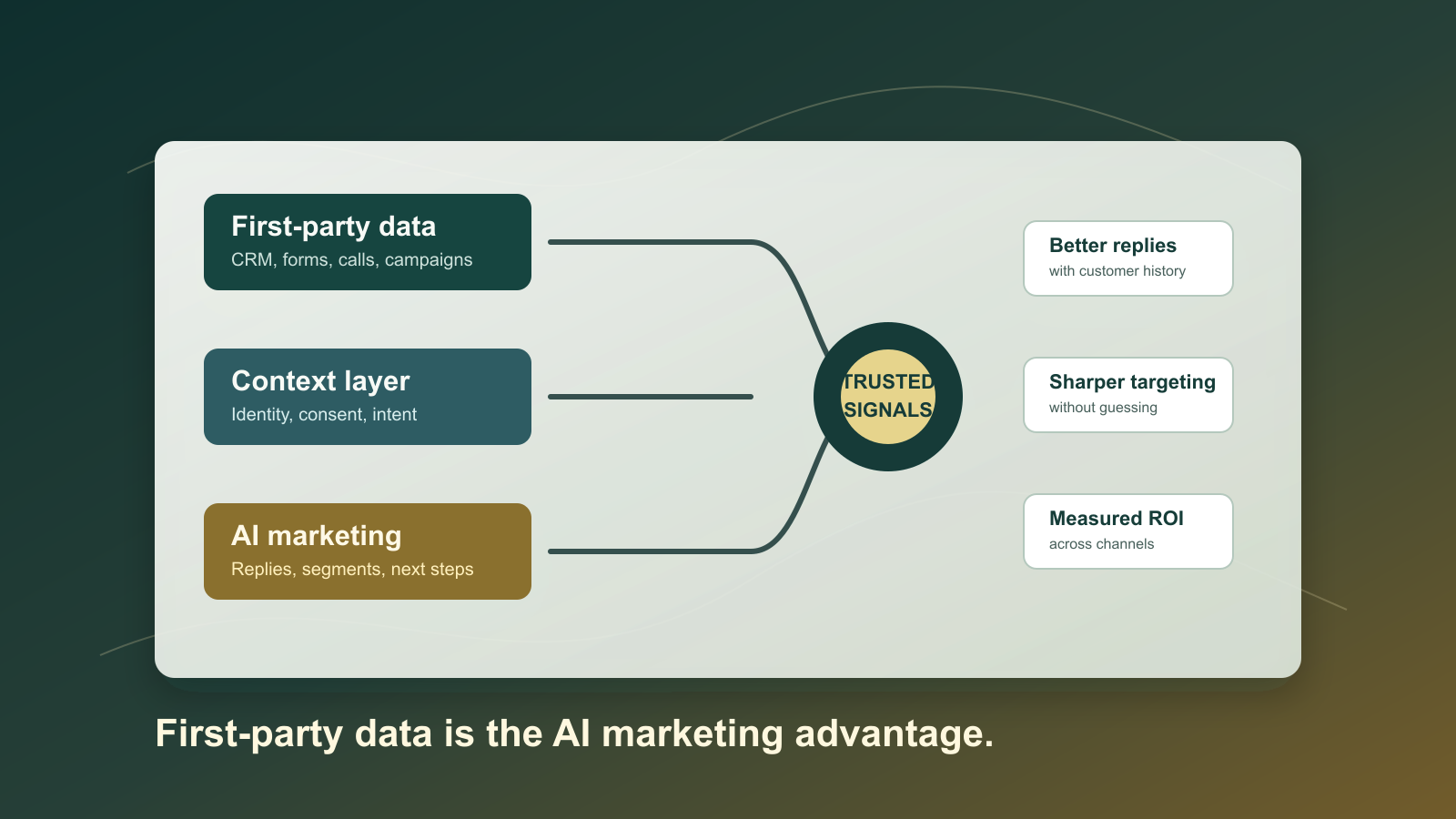
This also makes the AI safer. The model is not asked to decide who should hear what from scratch. It receives a bounded task: draft a message for this homeowner, about this service moment, using this known context, without making financial, legal, insurance, or repair claims beyond the source data. The system owns the trigger. The AI only helps package the communication.
Make the CRM the source of truth
NAR's REALTOR Technology Survey shows why this has to live in the CRM instead of a spreadsheet on the side. In the survey, social media remained the top lead-generating technology, but CRM followed as the second-ranked source. The same survey found that agents adopt technology primarily to save time and improve the client experience. A maintenance map does both only if it is attached to the contact record, visible during conversations, and available to the automations that send messages.
The minimum implementation is straightforward.
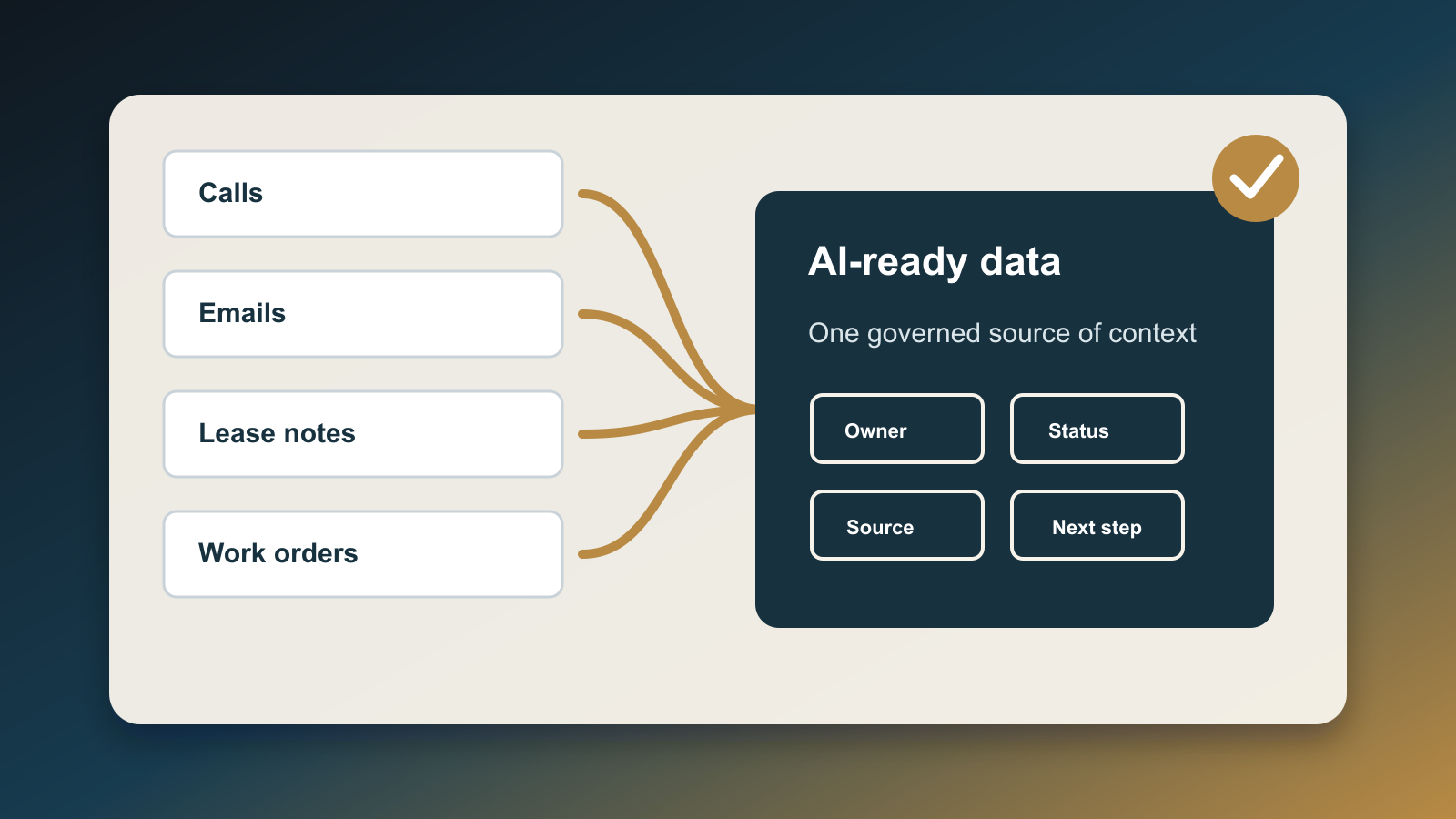
Create a Homeowner Profile object or custom section connected to each closed client. Add fields for property systems, known deferred items, ownership horizon, service moments, vendor history, consent, and next useful check-in. Import what can be extracted from transaction data, inspection summaries, closing notes, and existing CRM notes. Then make every post-close interaction update the map.
Use AI for extraction with review, not blind authority. Let it summarize inspection documents into candidate fields, but require a human to approve anything that could affect advice. Let it draft check-ins from approved fields, but block it from inventing diagnoses or promises. Let it classify replies into service moments, but route repair, insurance, legal, and valuation issues back to the human owner.
The business result
The commercial value is not just referral volume. It is better relationship memory.
A client who hears from you about a tax deadline, a maintenance reminder, a vendor issue you already helped with, or a realistic market question is more likely to experience the follow-up as service. A client who gets a generic AI-written check-in every quarter experiences the system as automation.
The difference is the map.
Before AI sends the next past-client campaign, build the operating record that makes the outreach earned. Treat every closed transaction as the start of a homeowner service account. Capture the property facts, the ownership horizon, the service moments, and the consent boundaries. Then let AI write from that truth.
That is how post-close automation becomes useful instead of merely frequent.

Written by
Ben Laube
AI Implementation Strategist & Real Estate Tech Expert
Ben Laube helps real estate professionals and businesses harness the power of AI to scale operations, increase productivity, and build intelligent systems. With deep expertise in AI implementation, automation, and real estate technology, Ben delivers practical strategies that drive measurable results.
View full profile