Build a Vacant Property Watch Board Before AI Advises Sellers
Build a Vacant Property Watch Board Before AI Advises Sellers
Vacant listings create a specific kind of operational risk. Nobody is there every day to notice a dead battery, a broken window, a water issue, a missing lockbox, an unapproved contractor, or a neighbor complaint. That makes the property tempting for shortcuts: quick AI-written seller updates, generic safety reminders, and optimistic vendor instructions that sound helpful but are not anchored to current evidence.
The better pattern is simple. Before an AI assistant tells a seller what is fine, what to inspect, or what to do next, the team should keep a vacant property watch board. The board is not a security system. It is the operating record that shows what the team actually knows, who verified it, what changed, and what still needs human review.
This matters more as AI moves from drafting captions into client communication. NAR's 2025 member survey found broad use of digital tools and AI-generated content in real estate service, which is useful only when the system has trustworthy inputs. NIST's AI Risk Management Framework pushes the same discipline from another angle: AI outputs need governance, context, measurement, and accountable oversight. A vacant property is a good place to apply that standard because missing context can turn a routine update into bad advice.
1. Start With Property Status, Not a Message Draft
A seller usually asks for a simple answer: Is everything okay at the house? Can we lower the heat? Should we cancel a utility? Did the contractor finish? Is the showing feedback real? AI can draft that reply quickly, but speed is not the job. The job is to separate verified property status from assumptions.
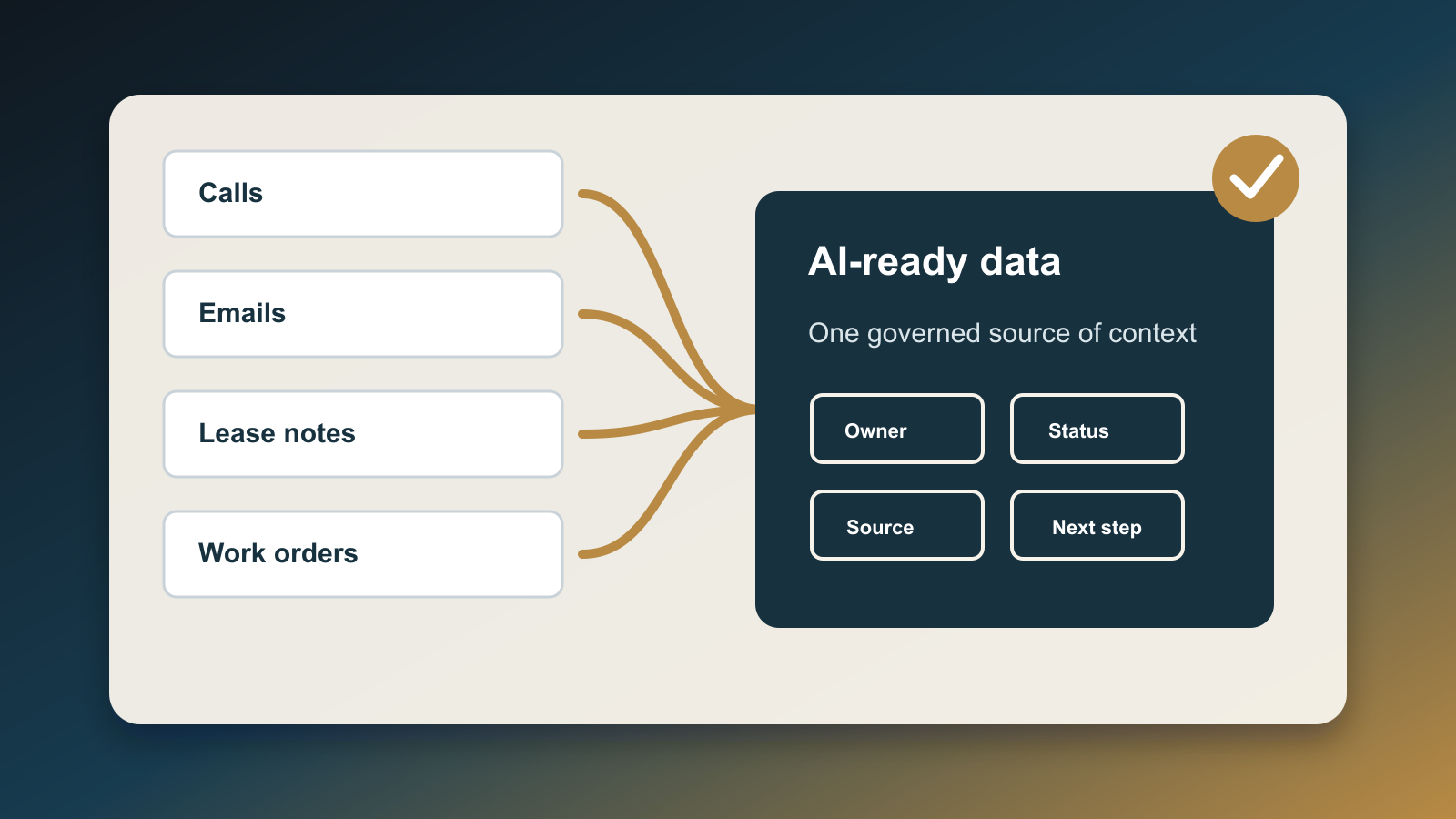
The watch board should start with a current status block. Include occupancy status, last confirmed visit, next scheduled visit, utility state, lockbox or access method, active vendors, open maintenance issues, known insurance constraints, and emergency contacts. Each item should have an owner and a timestamp. If an item is unknown, mark it unknown instead of letting the assistant smooth it over.
This single block changes the quality of every downstream AI prompt. Instead of asking, "Write a seller update about the vacant property," the team asks, "Using only the verified status fields below, draft a seller update that calls out unknowns and routes coverage, security, or maintenance decisions to a human." That is a different workflow.
2. Track Watch Visits as Evidence, Not Calendar Noise
A vacant property visit should not disappear into a calendar note. Put it on the board as evidence. Record the visitor, date, time, exterior condition, interior condition when accessed, weather-sensitive observations, photos captured, access problems, vendor signs, mail or package accumulation, and follow-up tasks. Use a repeatable checklist so a missing field is visible.
The point is not to create bureaucracy. The point is to keep AI from inventing continuity. If a property was last checked 11 days ago, the assistant should not write that the home is secure today. It can say the last recorded visit found no visible issue and that a fresh check is scheduled or needed.
A strong board also distinguishes between proof types. A photo, timestamped inspection note, vendor invoice, neighbor report, and seller text are not equal. AI should know which evidence is direct, which is hearsay, and which needs confirmation before a client-facing statement goes out.
3. Keep Coverage and Vacancy Rules Out of the Guessing Layer
Vacancy can affect insurance and loss handling. The Insurance Information Institute explains that vacant homes may require different coverage attention because risks change when no one occupies the property. That does not mean an agent should interpret a policy or promise coverage. It means the watch board should keep policy-sensitive facts visible: vacancy date, carrier contact status, seller confirmation, known maintenance requirements, open claims, and questions that must go to the seller's insurance professional.
This is where AI needs hard boundaries. It can summarize the known timeline. It can draft a neutral reminder to confirm vacancy coverage with the carrier. It should not tell the seller that the property is covered, that a claim will be approved, or that a condition is harmless.
Add an escalation rule: any AI draft that mentions insurance, coverage, claim, vacancy period, liability, vandalism, theft, water damage, or weather damage requires human approval before sending. That rule is easy to enforce when those terms are tied to board fields.
4. Separate Security Vendors From Seller Decisions
Vacant homes often trigger security questions: camera placement, monitoring, locks, access codes, signage, lighting, alarms, or contractor access. The FTC's guidance on shopping for home security systems emphasizes research, written terms, monitoring details, and avoiding pressure tactics. That advice translates well into real estate operations.
The board should keep a security vendor lane with proposals, pricing, service terms, seller authorization, installation status, access credentials, cancellation rules, and who is allowed to discuss vendor options. If the team uses AI to summarize vendor choices, the assistant should cite only the stored proposal details and should include a clear handoff for seller approval.
Do not let AI turn a rough idea into an implied recommendation. "Install cameras" is not an operations plan. The board should answer: who proposed them, what they monitor, who pays, who has access, what happens after closing, and whether the seller approved the work.
5. Control Contractor and Repair Communication
Vacant properties also attract urgent repair decisions. A small issue can become a rushed vendor call; a rushed vendor call can become a bad payment or authorization trail. FTC home repair guidance warns consumers to avoid pressure, verify contractors, get written estimates, and be careful with payment demands. A real estate team should make those controls visible before AI drafts anything about repairs.
The repair lane should include the request source, photos, estimate, license or vendor verification where relevant, approval status, payment path, appointment time, access method, completion evidence, and unresolved concerns. If the assistant drafts a seller update, it should distinguish between "estimate received," "seller approved," "work scheduled," and "work completed." Those are not interchangeable.
This protects the team from a common automation mistake: using polished language to hide operational uncertainty. A sentence like "The repair is handled" might sound efficient, but it is risky if the actual board only says an estimate arrived.
6. Build the AI Prompt Around Exceptions
The watch board becomes powerful when it drives exception-based prompts. The assistant should not just summarize the property. It should identify what is stale, missing, conflicting, or approval-sensitive.
A useful prompt looks like this: "Review the vacant property watch board. Draft a seller update using verified facts only. List missing facts separately. Do not provide insurance, legal, security, or contractor advice. Flag anything older than seven days. Route any payment, coverage, access, or vendor authorization question to a human."
That prompt is only reliable if the board has structured fields. Without the board, the model will infer from scattered notes. With the board, it can behave more like an operations clerk: summarize, flag gaps, and leave decisions to the accountable person.
7. What to Put on the Board This Week
Start with five lanes. First, property status: occupancy, utilities, access, last visit, next visit, and owner. Second, watch evidence: visit notes, photos, issues, and timestamps. Third, coverage and risk: vacancy date, seller insurance confirmation, open coverage questions, and escalation status. Fourth, vendors and security: proposals, approvals, access, installation, and cancellation terms. Fifth, repairs and incidents: source, evidence, estimate, approval, completion, and unresolved risk.
Then add two system rules. AI can draft from verified fields only. AI cannot close an exception. A person closes exceptions after evidence is updated.
That is the difference between automation that makes a vacant listing feel calmer and automation that creates false confidence. The seller does not need a smarter-sounding update. The seller needs a team that knows what is known, shows what is unknown, and uses AI to keep the operating record clear.
Sources
- National Association of REALTORS, "Realtors Embrace AI, Digital Tools to Enhance Client Service," September 18, 2025.
- National Institute of Standards and Technology, AI Risk Management Framework, accessed May 7, 2026.
- Insurance Information Institute, "When no one's home: Understanding role of vacancy insurance," accessed May 7, 2026.
- Federal Trade Commission, "How To Avoid Scams When You Shop for a Home Security System," accessed May 7, 2026.
- Federal Trade Commission, "Home Repair Scams," accessed May 7, 2026.
- Federal Trade Commission, "How To Avoid a Home Improvement Scam," accessed May 7, 2026.

Written by
Ben Laube
AI Implementation Strategist & Real Estate Tech Expert
Ben Laube helps real estate professionals and businesses harness the power of AI to scale operations, increase productivity, and build intelligent systems. With deep expertise in AI implementation, automation, and real estate technology, Ben delivers practical strategies that drive measurable results.
View full profile